
On a visit to New Delhi last week, Dr Amin Jaffer, the curator of the India Pavilion at the 61st International Art Exhibition of La Biennale di Venezia, spoke with STIR about his plans for the Venice Biennale. This marks India’s return to Venice for the first time since 2019. Geographies of Distance: Remembering Home is presented by the Ministry of Culture, Government of India, in partnership with the Nita Mukesh Ambani Cultural Centre and Serendipity Arts Foundation. The exhibition will be on view at the Arsenale in Venice from May 9 – November 22, 2026, with previews from May 6 – 8, 2026.
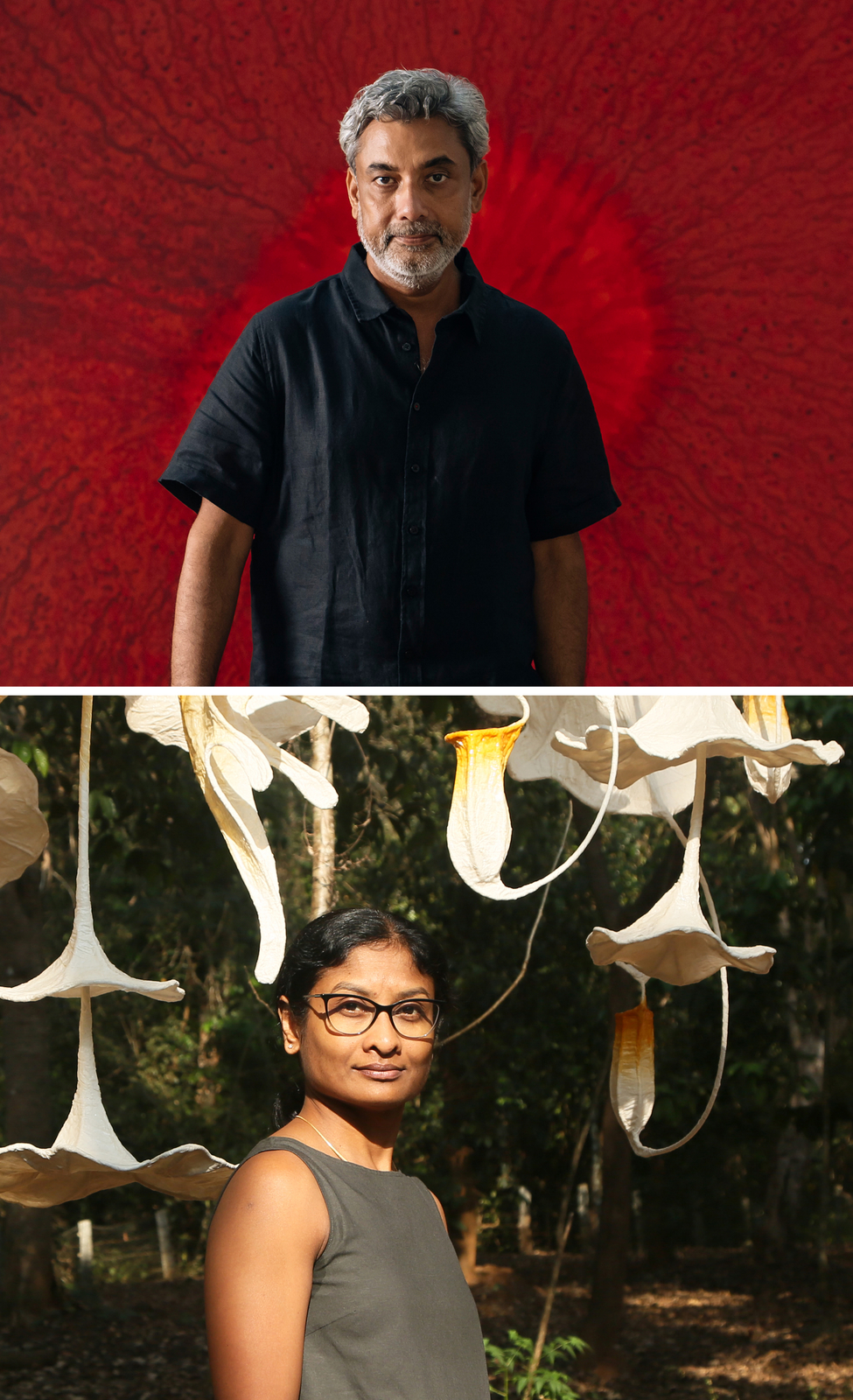
In keeping with the Biennale’s overarching theme, In Minor Keys, conceived by late curator Koyo Kouoh, Jaffer brings together five Indian artists – Alwar Balasubramaniam, Sumakshi Singh, Ranjani Shettar, Asim Waqif and Skarma Sonam Tashi. Through distinct practices, they each explore the idea of home as an emotional and material construct, shaped by memory, migration and culture. In conversation with STIR, Jaffer makes much of India’s recent economic history, highlighting major infrastructural developments and historical trends of migration and mobility. In his responses, lightly edited for clarity, Jaffer speaks about his curatorial framework, the selection of artists and the significance of a national showing at the Biennale.
Ranjana Dave: What aspects of the Indian context most shaped your thinking around home as memory, distance and attachment?
Amin Jaffer: In terms of [India], there are two contexts that are particularly important. One is that India is in a stage of rapid change…economic growth sustained year after year, a great degree of development economically and demographic growth – there are about 15 million new Indians every year. And so…what renders [the project] relevant and contemporary at this moment is that what we see, particularly in secondary and tertiary cities in India, is [a] rapid change in physical space and urban space. We're having redevelopment, [a] rearrangement of space, [a] rearrangement of the ways in which we live, because of economic advances, technological investment and [the] scarcity of space.
As we move into new dwellings, new apartments, new neighbourhoods, new spaces, the question remains about the past, former spaces, the spaces that are erased or that disappear, the neighbourhoods that go. This is one aspect of the project. The other aspect of the project is to remember that Indians probably [move] more than ever, but that Indians have in their DNA a culture of migration. There were communities of Indians in ancient Mesopotamia. Indians have always been traders and seafarers. They've always travelled, and they've always spread their know-how, their expertise, their religion, their knowledge, their labour in some cases. It means that there are people who constantly [have] to refer back to where they came from. India today has a particularly vocal [and] numerically and economically strong diaspora. These are people who, after [multiple] generations outside of India, still feel connected to home. The project deals with this aspect. On the one hand, the physical change of space in India, and on the other hand, the fact that if you're geographically removed from India, you still perceive it as home.
These five artists have been brought together to express this aspect of home under threat or under change. What we hope is that visitors who come through the space will reflect on their own condition in life, their own sense of belonging and will decide whether…home is a concept connected to physical space or whether it's an emotional state. It's an accumulation of different elements that evoke this sentiment of home.
Ranjana: The exhibition brings together artists from diverse regions and practices. What guided your selection of these five particular artists and their works, and what connective threads did you see across their approaches?
Amin: The first artist of the five was Sumakshi Singh. She created, in thread and embroidery, the family house of her grandparents at 33 Link Road in Delhi, which was demolished. The house was a repository of her family history. It's where everything happened in her family. And when it disappeared, she was very impacted because it not only [signalled] the passing of her grandparents, but all the rituals that took place in the house – the birthdays, the moments – and particularly the fact that the women of her family had a culture of stitching and embroidering and knitting, and they used to do this in the garden. And so, before the house was demolished, she measured the house and recreated it in thread. This really struck me very deeply because I also come from a family where, on my mother's side, my grandmother and all of my maasis [mother’s sisters] would embroider and sew all the time.
And as a tradition, it's dying. I found [it] deeply touching [how] Sumakshi channelled her family story and her grandmother and her aunts through the medium of embroidery, recreating the physical space. This was what really triggered the concept of the pavilion. When I spoke to the Ministry of Culture about their ideas of the Venice Biennale, they said very clearly that because India is so diverse – geographically, in terms of culture and community, we really should develop a project with multiple artists. This gave me the freedom to think more laterally; normally, the Venice Biennale is about a single artist’s project in each pavilion. I wanted not just to represent regionality and difference in generation, but also difference in material.
I began to think about what constitutes home. Sumakshi, in a way, evoked the physicality of the architecture. A Bala [Alwar Balasubramaniam]...in Tamil Nadu created a series in terracotta clay, evoking the soil. Ranjani Shettar is an artist from Karnataka who works extensively with floral forms and organic natural forms. Flowers play a very big role in Indian civilisation. They're worn as adornments. They're used in garlanding. They're used in rituals of marriage and connection and veneration. Bala’s soil, Ranjani’s garden and Sumakshi's house really represented home. Asim [Waqif], with his work in bamboo, [evoked] scaffolding. He represented change, renewal, progress, [the] future. The erasure of the past moving into the future. Behind the scaffolding, you always wonder what's going to come next. And we, as Indians, are people who are deeply rooted in our civilisation, deeply rooted in our tradition. But we're also very adaptable, progressive, forward-looking people.
Ranjana: There is also a fifth artist…
Amin: [I selected Skarma Sonam] Tashi from a group of five [artists] proposed to me by the Ministry of Culture. They wanted to include a younger artist, one who hasn't yet really shown much on an international platform. Tashi’s work is about architecture and ecology in Ladakh. And he's very moved by traditional housing in Ladakh, in which [houses are] built into the mountainside. What does it mean? It means using local materials that are sustainable, organic and which are applied in such a way as to keep warm in the winter and cool in the summer. Of course, this way of living is changing because of steel, because of concrete, because of new technologies. He is really commemorating the way in which [people] in Ladakh [have] lived within nature.
Ranjana: How does understanding home as an emotional experience rather than a fixed place change the way we think about belonging in an era of mass mobility but also displacement?
Amin: Speaking from an Indian perspective, and I'm a member of the Indian diaspora, I think the question of how we recreate home or perpetuate home…Sumakshi's work shows in particular how home is carefully reconstructed. The concept of home is tied up with family, mythology, ritual, rights, environment, character [and] personality. So when we migrate…how do we keep the concept of home alive? Because we are a nation with a very large and significant diaspora, this is a particularly important question. I'm always impressed/amused when I see weddings of second- or third-generation Indian families in America and Britain. [There’s] this real effort to keep up the ritual. The parents know the ritual, the kids know it less and the grandkids really have no idea, but they're enjoying it.
These are aspects that maintain home; there's this feeling of home because you're dressed as you would have been, or you're eating as you would have eaten. Venice is an interesting example; it's a port city. It's a city that's constructed out of nothing; it's just sand. It was built up [with] blood, sweat, tears, intelligence. Venice is a port city that has always welcomed the outside world, and it had, in its heyday, large communities of international traders who operated there. I love the fact that the Venice Biennale exists because it's about the world coming back to Venice and showcasing what it has. In the past, it was goods; now it’s ideas and art. For me, it's a very appropriate platform for this kind of expression.
Ranjana: What does the temporary, high-visibility nature of a national pavilion make possible for the artistic contexts it platforms? How does the urgency of the context change the stakes of curating?
Amin: I'm always impressed by temporary projects like [expositions] and biennales because they involve a huge commitment – planning, budgets, organisation, logistics – for something which will last only a short period of time. Venice is still relatively long [at six months. The stakes are very high because it's the Olympics of the contemporary art world, but we must remember that contemporary art is more than just the visual appeal of an installation or project; it's the messaging behind it. It's a nation's chance to really speak on the global stage about an issue which is relevant. An issue that's relevant within the overall theme of the Biennale, because I think one thing that's very important is to respect the theme. This year it's In Minor Keys…the concept of the pavilion, when we think of home, is [that] it's an interiorisation. We recess to our earliest memories, we ask ourselves about where we're going, where we've come from.
We want people who come into the pavilion to engage with it emotionally and aesthetically. I never cease to be amazed by the commitment people in the cultural world have to temporary projects. We're sitting in the middle of a temporary project here (the interview was conducted at India Art Fair 2026). One week ago, this did not exist; next week, this will not exist.
Temporary exhibitions…are a chance to trigger ideas. We bring together things that are normally not shown together to evoke a particular response. [At the biennale], you come in very mindful of that subject, and you see how it's interpreted by different artists and different nations.
Ranjana: Once the Biennale moment passes, what kinds of conversations, debates or shifts in thinking – ripples – do you hope the pavilion leaves behind, also within India’s art and cultural ecosystem?
Amin: [There] is the ripple of today's social media. People will come and see it. They will film it. They will speak about it. They'll post it.
We will have a catalogue, brochures, microsites. We have also been talking about bringing the pavilion to India so that a larger audience can see it. Venice is a challenging environment for tourists and travellers. It's expensive. From India, it's a long distance too. If we can bring these Indian artists back to India…that would be a great achievement.